Yes. If it's reached you with the Licious name on it, it has gone through our safety checks and quality screening. That's non-negotiable for us.
Q: Are Licious eggs impacted by the recent egg safety concern in the news?
No. We understand why this news is unsettling, but based on the checks we run and the results we've seen so far, Licious eggs are not impacted.
Q: Was nitrofuran found in Licious eggs?
No, it was not found in the batches we tested. We screen for nitrofuran markers along with other antibiotic residues as part of our regular residue testing.
Q: Were any antibiotics found in Licious eggs?
No. Our residue screening has not shown antibiotics above the measurable limits in the batches we tested.
Q: Were pesticides found in Licious eggs?
No. Our pesticide residue screening has not shown pesticides above measurable limits in the batches we test.
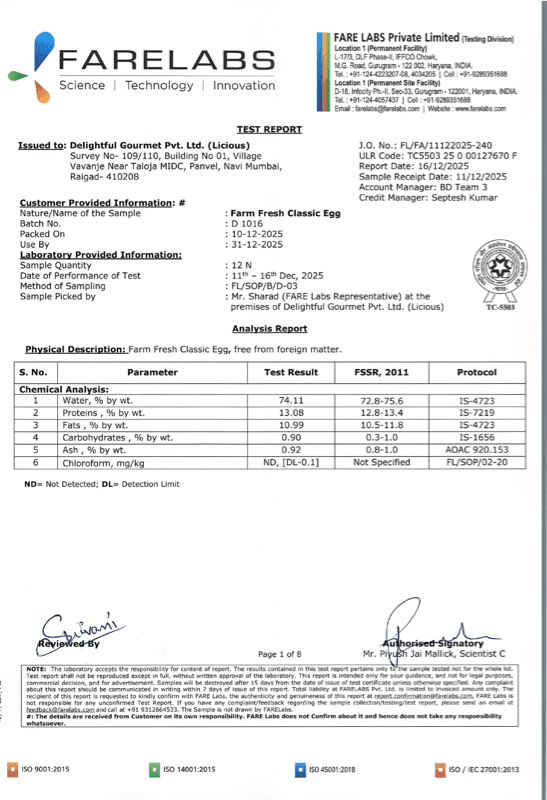
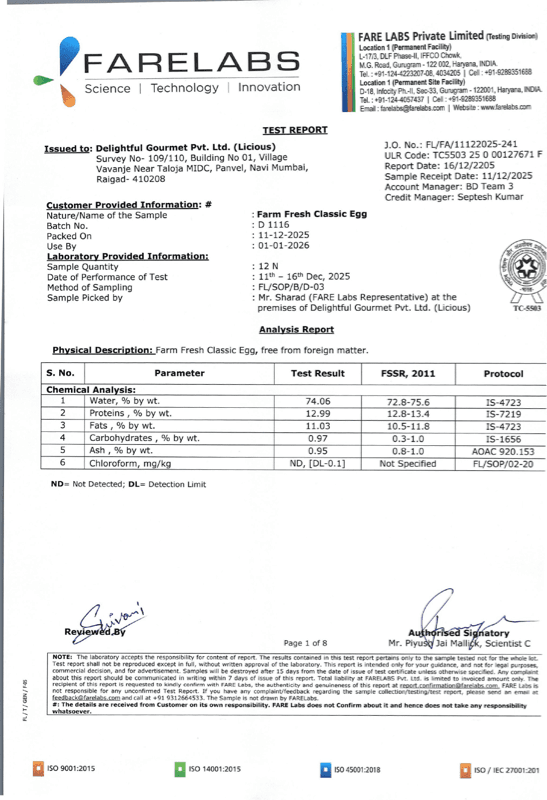
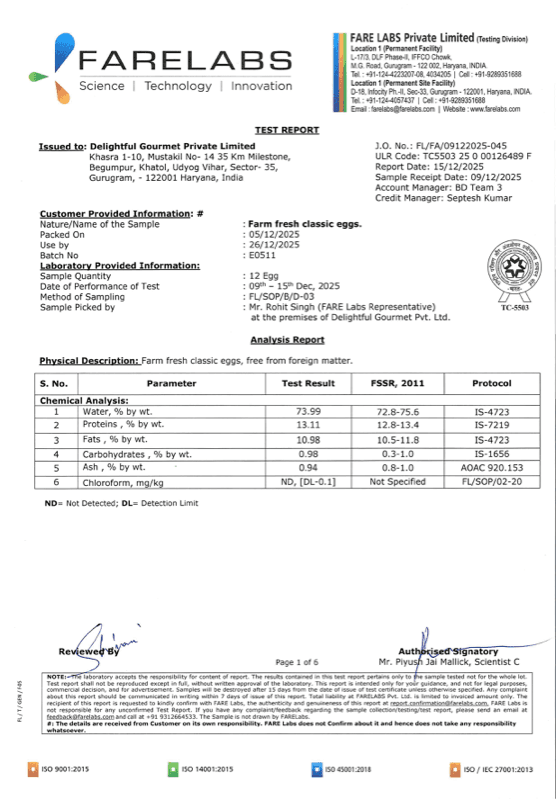
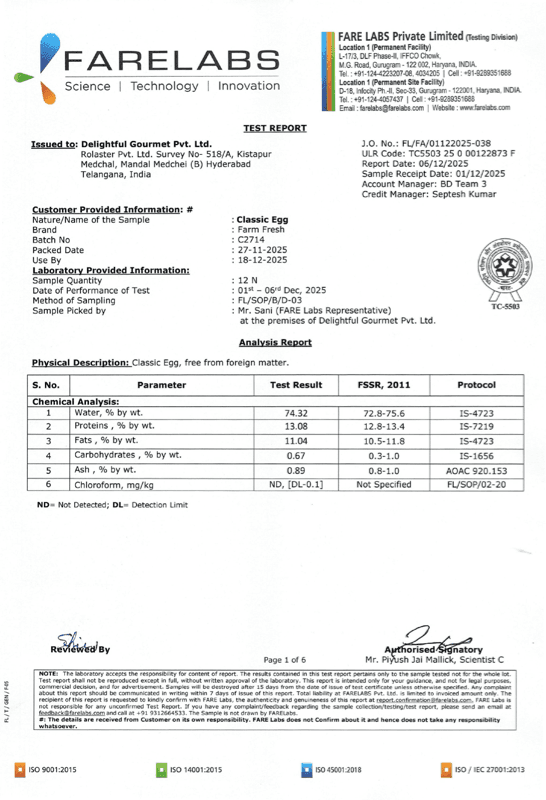
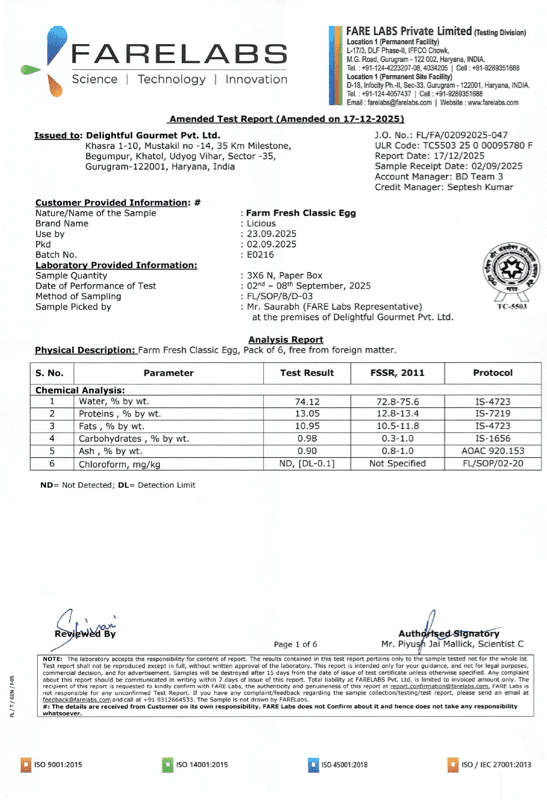
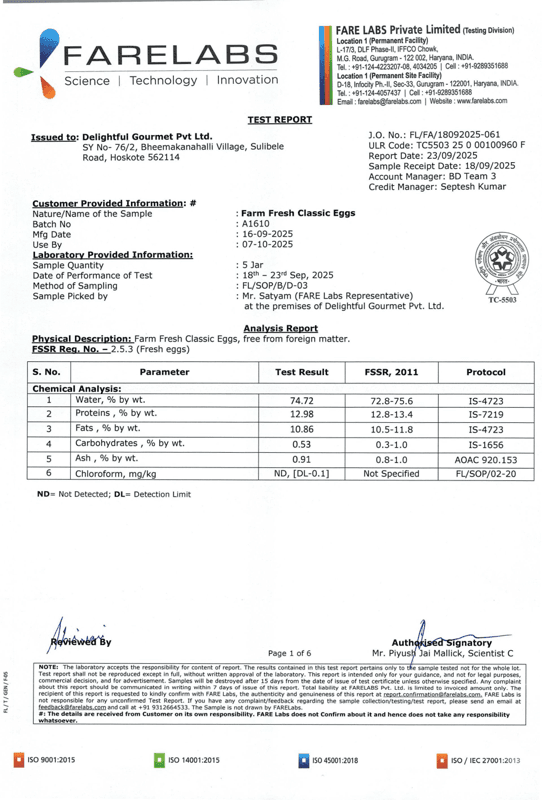
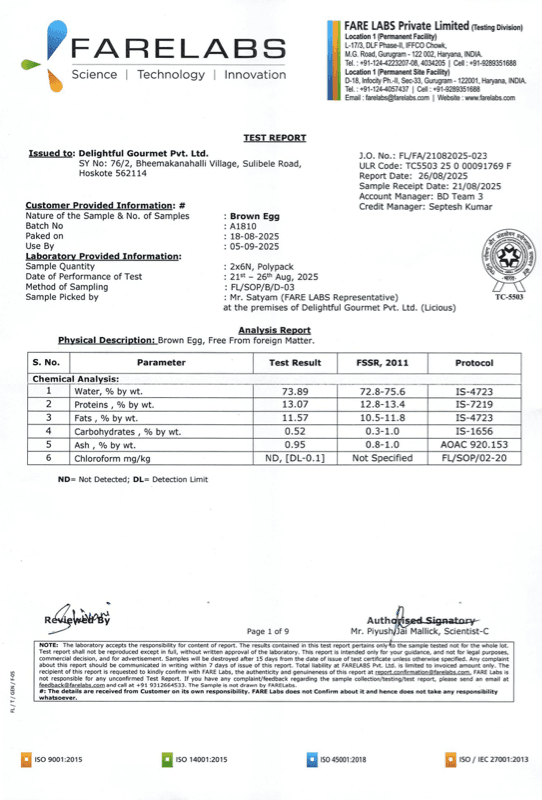
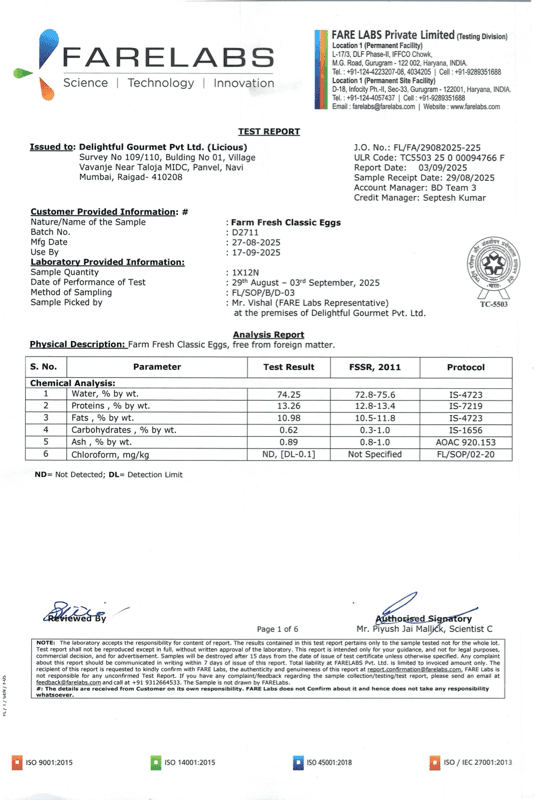
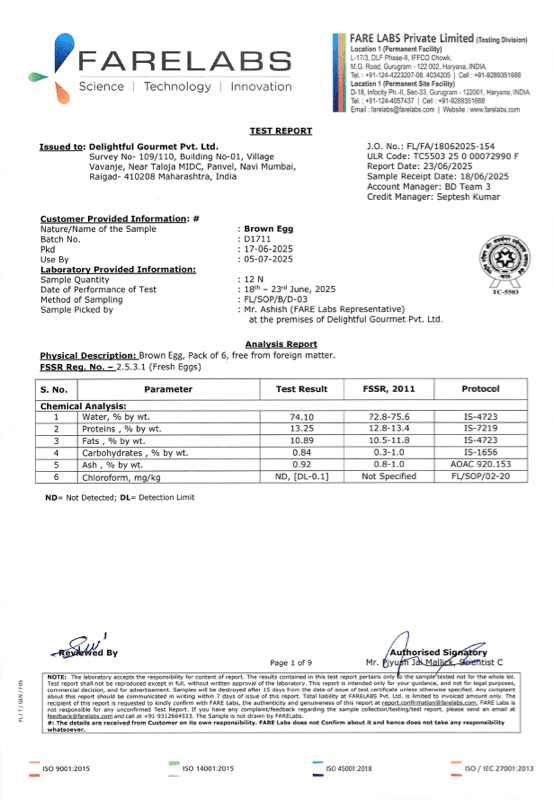
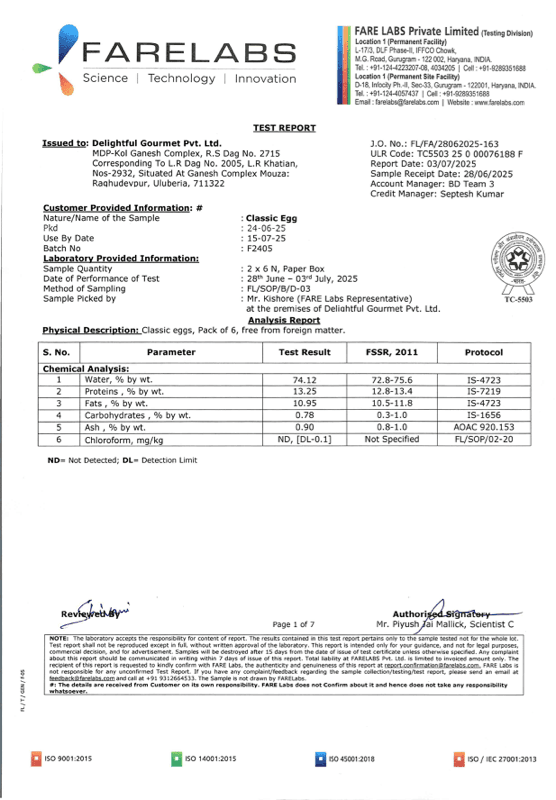
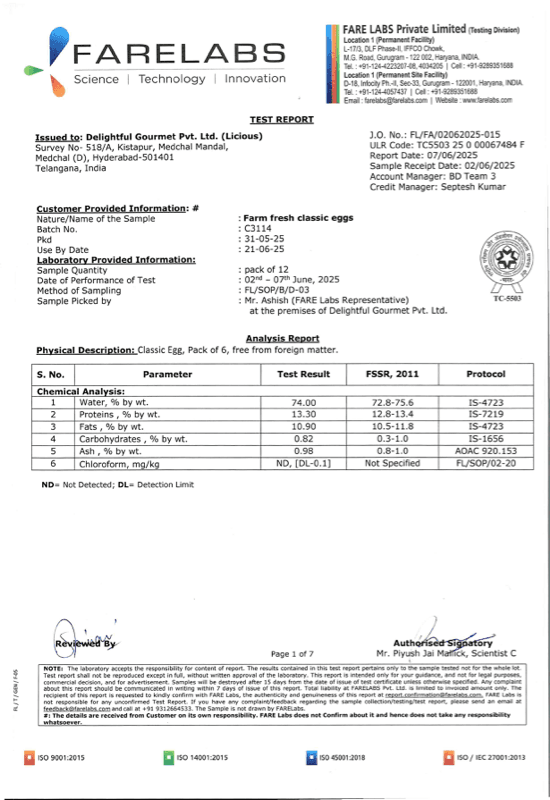
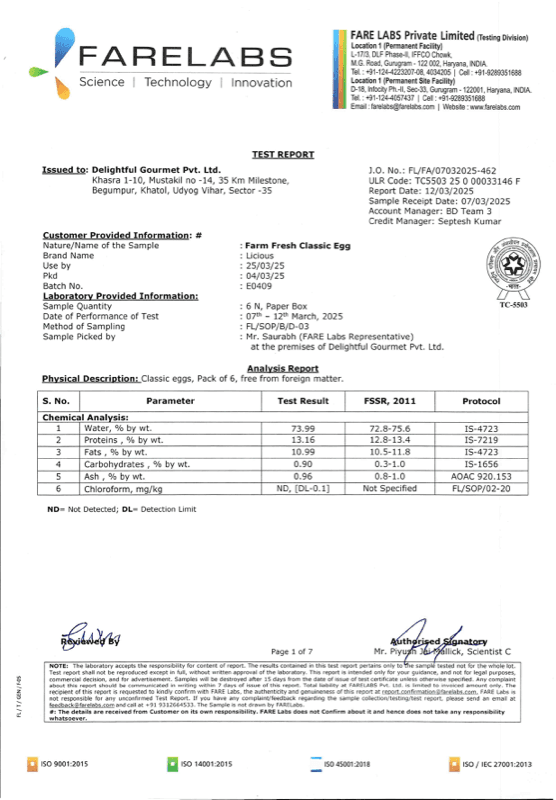
Licious Eggs December 2025 | Report 3
Licious Eggs December 2025 | Report 4
Licious Eggs December 2025 | Report 6
Licious Eggs November 2025 | Report 2
Licious Eggs September 2025 | Report
Licious Eggs September 2025 | Report 7
Licious Eggs August 2025 | Report 1
Licious Eggs August 2025 | Report 5
Licious Eggs June 2025 | Report 1
Licious Eggs June 2025 | Report 3
Licious Eggs May 2025 | Report 6
Licious Eggs March 2025 | Report 5
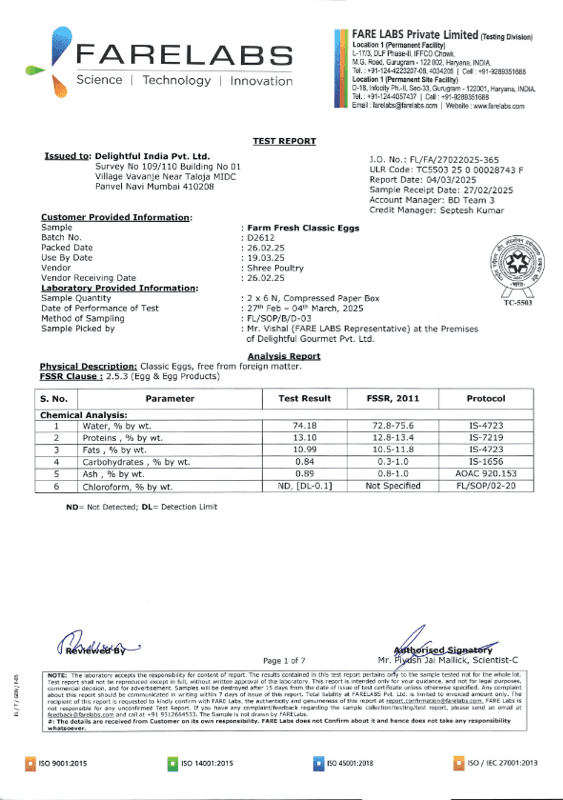
Licious Eggs February 2025 | Report 2
Licious Eggs February 2025 | Report 4
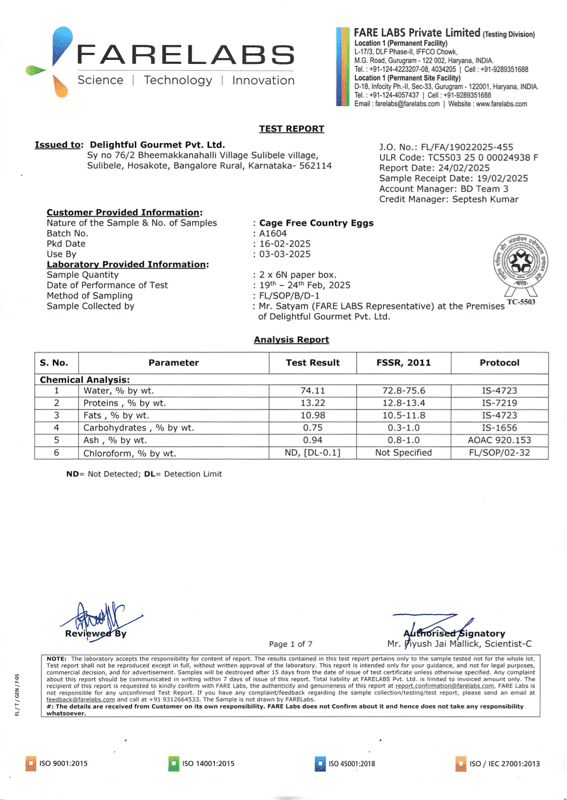
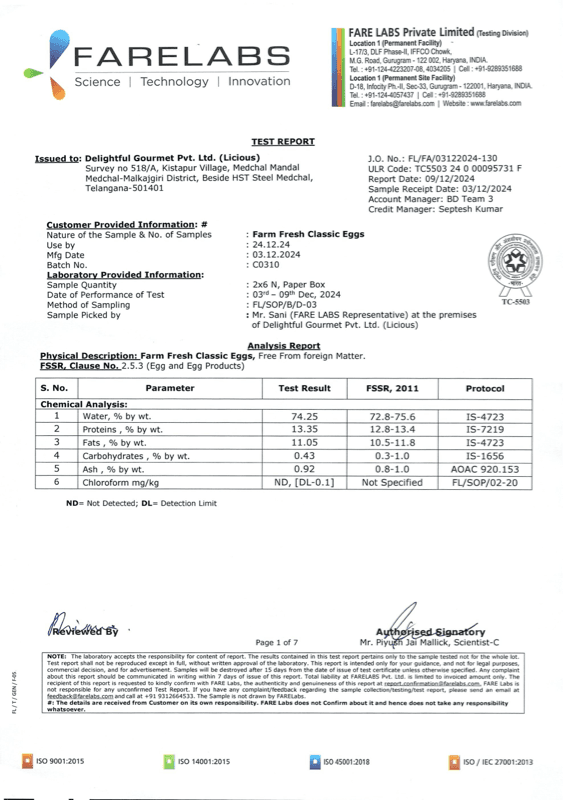
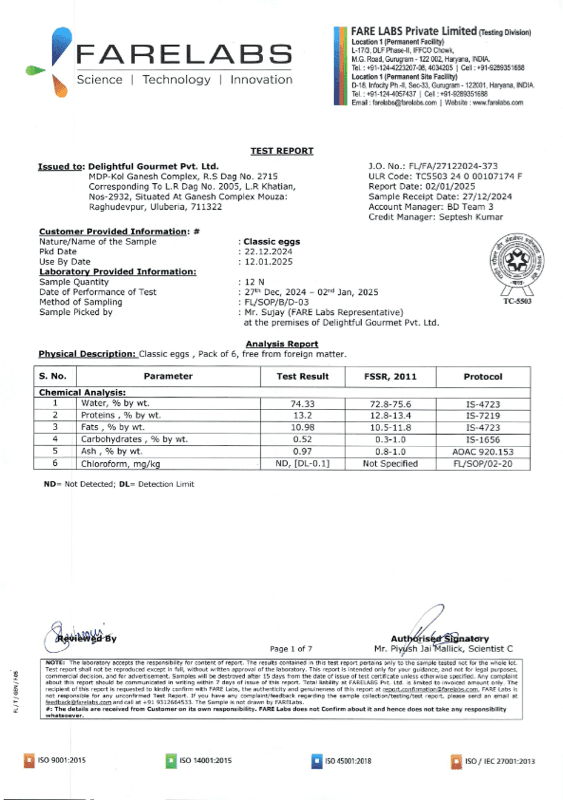
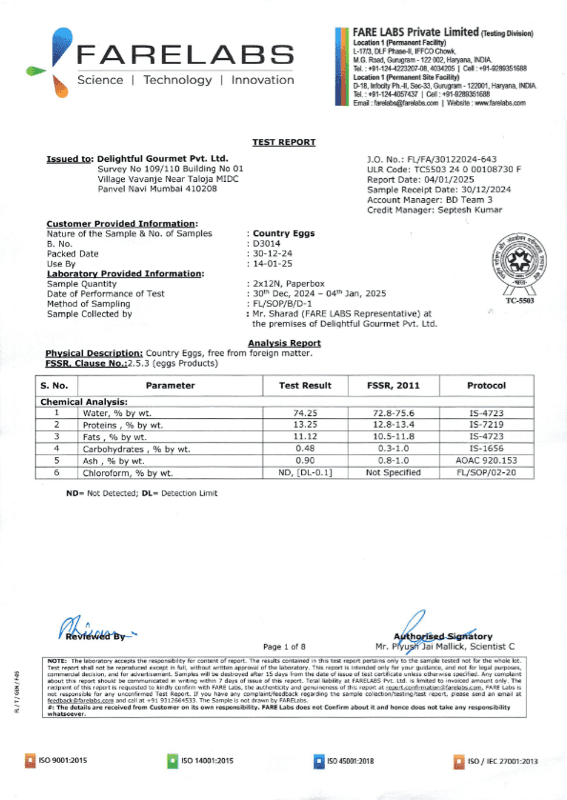
Licious Eggs December 2024 | Report 1
Licious Eggs December 2024 | Report 2
Licious Eggs December 2024 | Report 3
Frequently Asked Questions (FAQ)
A. What we test and how
Q: What exactly does Licious test eggs for?
We don't look at just one thing. We check eggs across a full safety panel, including: - Antibiotic residues - Pesticidal residues - Microbiological analysis - Heavy metals and select contaminants - Nutritional Parameters And we back that up with physical and organoleptic checks for freshness and defects.
Q: Do you test specifically for nitrofuran markers?
Yes. Nitrofuran markers are included in our residue screening.
Q: Do you test for banned or high-concern antibiotics?
Yes. We include high-concern compounds in our screening panel and treat this as a serious part of our safety program.
Q: Do you test for microbiological safety?
Yes. We run Internal and external microbiology checks to ensure eggs meet hygiene and food safety standards.
Q: Do you test for freshness and quality in addition to safety?
Absolutely. We also check for things you care about immediately as a consumer: freshness, cracks, stains, visible defects and consistent grading.
B. Lab report basics
Q: What is this lab report, and why does Licious share it?
It's a simple way to show you proof, not just promises. A lab report is an independent test result that tells you what was checked and what was found.
Q: Is this testing done by a third-party laboratory?
Yes. Along with our internal checks, we get eggs tested by independent third-party FSSAI notified, accredited food testing labs.
Q: How do I know the lab is credible and accredited?
We only work with FSSAI-notified, NABL-accredited food testing laboratories. These labs follow validated testing methods, run samples on calibrated instruments, and operate under strict quality controls and audit systems to ensure results are accurate and reliable.
Q: How often are these tests conducted?
We run routine checks regularly, and we also do periodic third-party testing. The frequency depends on the type of test, but the intent stays the same: keep verifying, keep tightening.
C. Understanding terms
Q: What does "Not Detected" mean in a lab report?
It simply means the lab didn't find that substance at levels its test can detect.
Q: What does "BLQ" mean?
BLQ (Below Limit of Quantification) means "below the level the lab can reliably measure." In plain terms, it's treated as not found at measurable levels.
Q: What is "LOQ" and why does it matter?
LOQ (Limit of Quantification) is the test's measuring line. If something is below that line, the lab can't reliably quantify it. It's a way of showing the test sensitivity.
Q: Does "not detected" mean zero?
Not always absolute zero. But it does mean nothing was found above the test's measurable limit, which is how food safety testing is reported across the world.
D. Beyond the lab: quality checks and handling
Q: What are float tests, and what do they check?
It's a quick freshness check. It helps identify eggs that may be older and shouldn't be packed.
Q: What is candling, and why is it done?
Candling is when we use light to spot cracks and internal defects that you can't always see from the outside. It's one more filter before eggs are packed.
Q: How are Licious eggs stored and handled to protect quality?
Eggs are handled under hygiene controls and stored under controlled conditions to protect freshness while they're being packed and distributed.
Q: What happens if any test ever fails or is outside limits?
We don't take chances. The batch is held back, not sold. Then we investigate, fix what needs fixing, and only clear products that meet the standards we're comfortable putting our name on.